
 Deals Of The Day
 Top Sellers
 Top Trending
 New Arrivals
 Shop By Brands
Work Benches Hydraulic
Shop hydraulic work benches at Janeice Products Co Inc, your trusted material handling supply source based in Aiken, South Carolina. Whether you need an adjustable-height workbench for assembly operations, a hydraulic workstation for heavy components, or a height-adjustable platform for manufacturing and maintenance tasks, our catalog offers professional-grade solutions for industrial work environments. Hydraulic work benches help improve operator ergonomics, simplify material positioning, and support efficient workflows in manufacturing plants, warehouses, workshops, and production facilities. Explore our selection to find workbench solutions suited to your workspace, load requirements, and operational needs.
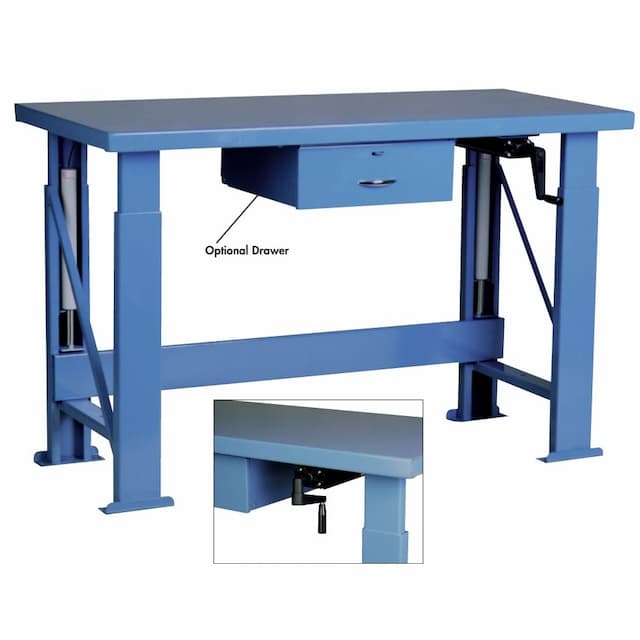
How to Choose the Right Hydraulic Work Bench
Choosing the right hydraulic work bench for your facility starts with understanding your application, load requirements, and preferred working height. Hydraulic work benches use a hydraulic lifting mechanism to raise or lower the work surface, helping operators position materials at a more comfortable and productive height. They are useful for assembly, inspection, repair, packaging, and other tasks that require frequent adjustments to working height.
Load capacity is one of the most important factors to consider. Determine the combined weight of the workpiece, tools, fixtures, and other materials that will be placed on the bench. Select a model with a rated capacity suitable for your application, and verify whether the stated capacity applies uniformly across the work surface or under specific loading conditions.
Work surface dimensions also affect productivity. A larger surface may be appropriate for assembling bulky components, while a compact workbench may be better suited to smaller workshops and limited floor space. Consider the dimensions of your products, the clearance required for tools, and the available space around the workstation.
The hydraulic lifting system, operating method, and available safety features should also be evaluated. Depending on the model, height adjustment may be manual, foot-operated, or powered. Always review the manufacturer's specifications to confirm the adjustment range, lifting speed, load capacity, and operating requirements before making a purchase.
Key Features to Look for in Hydraulic Work Benches
-
Load Capacity: Choose a workbench rated to safely support the combined weight of your workpieces, tools, fixtures, and accessories.
-
Height Adjustment Range: Verify the minimum and maximum working heights to ensure the bench accommodates the tasks and operators using it.
-
Hydraulic Lifting Mechanism: Consider the hydraulic system and operating method based on how frequently the work surface needs to be raised or lowered.
-
Work Surface Dimensions: Select a suitable length and width for your components, tools, and assembly activities.
-
Frame Construction: Look for a sturdy frame and durable materials appropriate for the demands of your industrial environment.
-
Safety Features: Check for appropriate locking mechanisms, overload protection where provided, stable support, and safeguards against unintended movement.
-
Ergonomic Design: Choose an adjustable work surface that helps reduce excessive bending, reaching, and awkward working postures.
-
Workspace Compatibility: Confirm the bench dimensions, floor requirements, clearance, and mobility options before installation.
Industries That Use Hydraulic Work Benches
-
Manufacturing: Position components at suitable working heights for assembly, production, inspection, and quality-control activities.
-
Warehousing & Distribution: Support packing, sorting, product preparation, and other repetitive handling tasks.
-
Automotive: Assist with component assembly, inspection, repair, and maintenance work in service facilities and workshops.
-
Industrial Maintenance & MRO: Provide adjustable work surfaces for equipment servicing, parts repair, and maintenance operations.
-
Packaging & Fulfillment: Improve access to products during packing, labeling, inspection, and order preparation.
-
Electronics & Electrical Assembly: Support precision assembly and inspection tasks where a comfortable working height is important.
-
Fabrication & Workshops: Provide a practical workstation for handling components, preparing parts, and performing routine workshop tasks.
Frequently Asked Questions About Hydraulic Work Benches
Q1: What is a hydraulic work bench?
A hydraulic work bench is an industrial workstation that uses a hydraulic mechanism to raise or lower its work surface. It allows operators to adjust the working height for different tasks, helping improve material positioning, accessibility, and workplace ergonomics.
Q2: What are hydraulic work benches used for?
Hydraulic work benches are used for assembly, inspection, packaging, repair, maintenance, and other industrial tasks that benefit from adjustable working heights. They can help position heavy or bulky workpieces more conveniently when the selected model is designed and rated for the application.
Q3: How do I determine the load capacity I need?
Calculate the total weight of the materials, tools, fixtures, and accessories that will be placed on the workbench. Select a model with an appropriate rated capacity and follow the manufacturer's loading instructions. Also check any restrictions on load distribution, as an unevenly distributed load may affect safe operation.
Q4: Can hydraulic work benches be adjusted to different working heights?
Yes. Height adjustment is a primary feature of hydraulic work benches. The available adjustment range and operating method vary by model. Check the product specifications to ensure the minimum and maximum heights meet your operational requirements.
Q5: Are hydraulic work benches suitable for assembly lines?
Yes. Hydraulic work benches can be suitable for assembly operations where components need to be positioned at different heights. They can help improve workstation flexibility and operator comfort. For continuous production lines, consider adjustment frequency, cycle requirements, load capacity, and compatibility with adjacent equipment.
Q6: What safety precautions should I follow when using a hydraulic work bench?
Always operate the bench within its rated capacity, distribute loads according to the manufacturer's instructions, and keep hands and other body parts clear of moving mechanisms. Use specified safety locks or supports when required for maintenance, and inspect the hydraulic system and structural components regularly. Never work beneath a raised surface unless the equipment's approved safety procedures and mechanical supports are in place.
Q7: What should I consider before purchasing a hydraulic work bench?
Evaluate the required load capacity, work surface size, height adjustment range, hydraulic operating method, frame construction, safety features, and available floor space. Also consider how often the height will be adjusted and whether the bench must integrate with existing production equipment. Review the specifications of each available model to find a suitable solution for your facility.
Janeice Products Co Inc supplies industrial and material handling equipment to businesses nationwide. Explore the available workbench options or contact the team at +1 803-652-3025 for assistance with product selection and purchasing requirements.