
 Deals Of The Day
 Top Sellers
 Top Trending
 New Arrivals
 Shop By Brands
Shelving Wire
Shop industrial wire shelving at Janeice Products Co Inc, your trusted material handling supply source based in Aiken, South Carolina. Whether you need wire shelving for warehouse inventory, commercial storage, food service supplies, maintenance equipment, or retail stockrooms, our catalog offers versatile storage solutions for a wide range of industrial and commercial applications. Wire shelving systems provide open access to stored items, promote airflow, and help keep products organized and visible. With a variety of sizes and configurations available, Janeice Products helps businesses make efficient use of storage space in warehouses, distribution centers, manufacturing facilities, workshops, and commercial environments.

How to Choose the Right Industrial Wire Shelving
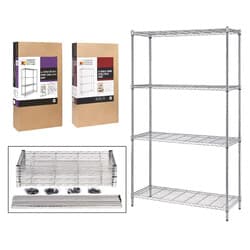
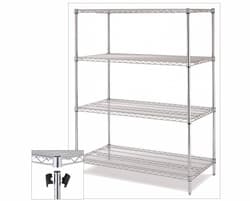
Choosing the right industrial wire shelving system starts with understanding your storage requirements, available floor space, and the weight of the items you plan to store. Consider the height, width, and depth of each shelving unit, the number of shelves required, and the total load each shelf must support. For warehouses and distribution centers, heavy-duty wire shelving can help organize inventory, supplies, and frequently accessed products while maintaining an open and accessible storage layout.
One of the main advantages of wire shelving is its open construction. Unlike solid shelves, wire shelves allow air and light to circulate around stored products, making it easier to view inventory and maintain an organized storage area. This design can be particularly useful in commercial kitchens, stockrooms, maintenance departments, and other environments where visibility and airflow are important.
Adjustability is another important consideration. Adjustable wire shelving allows you to change shelf heights to accommodate products of different sizes, from small containers and supplies to larger equipment and bulkier inventory. Before ordering, verify the dimensions of the shelving unit, the weight capacity of each shelf, the total unit capacity, and compatibility with any accessories you may need.
Key Features to Look for in Industrial Wire Shelving
-
Load Capacity: Check the manufacturer's rated capacity for each shelf and the complete shelving unit. Distribute loads evenly and follow the specified limits.
-
Adjustable Shelves: Select shelving systems that allow shelf heights to be changed as your inventory and storage requirements evolve.
-
Dimensions: Measure the available floor space and confirm the shelving unit's width, depth, and height before ordering.
-
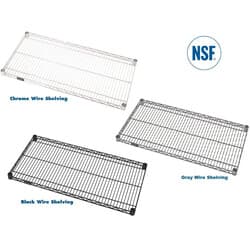
Material and Finish: Choose a suitable wire shelving material and finish based on the storage environment, moisture exposure, and durability requirements.
-
Airflow and Visibility: Open-wire construction improves visibility and air circulation around stored products, helping maintain an accessible storage layout.
-
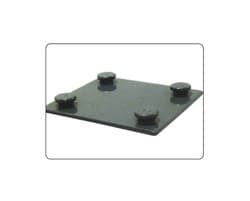
Stability: Consider the shelving unit's construction, support structure, and any required stabilizing accessories, particularly for tall installations or heavier loads.
-
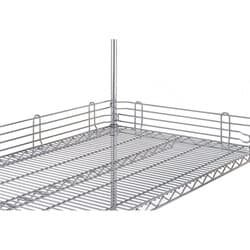
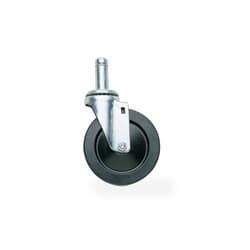
Accessories: Depending on the system, dividers, shelf liners, casters, and other compatible accessories can improve organization and functionality.
-
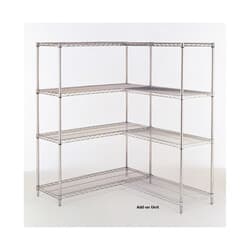
Expandable Storage: Modular shelving systems can help businesses adjust their storage layouts as inventory levels and operational requirements change.
Industries That Use Industrial Wire Shelving
-
Warehousing & Distribution: Organize inventory, picking supplies, packaging materials, and frequently accessed products.
-
Manufacturing: Store production components, tools, assembly supplies, and maintenance materials near workstations.
-
Food Service & Commercial Kitchens: Organize ingredients, utensils, kitchen supplies, and dry goods in suitable commercial storage environments.
-
Healthcare & Laboratories: Arrange equipment, supplies, containers, and frequently accessed materials in designated storage areas.
-
Retail & Stockrooms: Improve backroom organization and provide convenient access to merchandise, replenishment stock, and supplies.
-
Automotive & MRO: Store replacement parts, hardware, tools, and maintenance supplies in repair shops and service facilities.
-
Hospitality & Facilities Management: Organize housekeeping supplies, linens, equipment, and general facility inventory.
Frequently Asked Questions About Industrial Wire Shelving
Q1: What is industrial wire shelving used for?
Industrial wire shelving is used to organize inventory, supplies, tools, containers, and equipment in warehouses, manufacturing facilities, commercial kitchens, stockrooms, and maintenance areas. Its open design provides visibility and airflow while keeping stored items accessible.
Q2: What are the advantages of wire shelving compared with solid shelving?
Wire shelving provides an open storage surface that promotes airflow and makes stored items easier to see. It can also help reduce dust accumulation on shelf surfaces compared with some solid-shelf designs. Solid shelving may be preferable when very small items need a continuous surface or when containment is required.
Q3: Can wire shelving be adjusted to accommodate different product sizes?
Many industrial wire shelving systems feature adjustable shelves, allowing users to change shelf spacing according to their storage needs. Always check the individual product specifications to confirm the adjustment method and available configuration options.
Q4: How much weight can industrial wire shelving hold?
Weight capacity varies by shelving model, shelf dimensions, construction, and installation. Check the manufacturer's specifications for both individual shelf capacity and total unit capacity. Loads should be distributed appropriately, and the specified weight limits must not be exceeded.
Q5: Is wire shelving suitable for humid or wet environments?
Certain wire shelving systems are designed for environments where moisture resistance is important. However, suitability depends on the material and finish. Check the product specifications before selecting shelving for humid areas, washdown environments, or locations exposed to corrosive substances.
Q6: Can wire shelving be expanded or customized?
Some wire shelving systems offer modular configurations and compatible accessories that allow businesses to adjust shelf spacing, improve organization, or modify storage layouts. Verify compatibility between components before combining shelving units or adding accessories.
Q7: How do I choose the correct wire shelving size for my facility?
Measure the available floor space, including clearance for aisles, doors, and nearby equipment. Determine the required shelf dimensions, vertical spacing, number of levels, and expected load. Selecting a shelving unit that matches your inventory and workflow helps improve space utilization and accessibility.