
 Deals Of The Day
 Top Sellers
 Top Trending
 New Arrivals
 Shop By Brands
Pallets & Equipment Tilters
Shop industrial pallet tilters at Janeice Products Co Inc, your trusted material handling supply source based in Aiken, South Carolina. Whether you need to tilt palletized loads for easier access, position materials at a convenient working angle, or improve efficiency in loading, unloading, and assembly operations, our catalog offers material handling solutions for industrial and commercial applications. Pallet tilters help reduce repetitive bending and reaching by bringing stored products closer to the operator, supporting more ergonomic workflows in warehouses, manufacturing facilities, distribution centers, and production environments. Explore our selection of pallet tilting and load-positioning equipment to find a solution that meets your load capacity, platform size, and operational requirements.
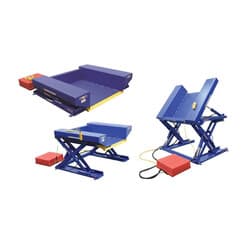
How to Choose the Right Industrial Pallet Tilter
Choosing the right industrial pallet tilter starts with understanding the weight, dimensions, and type of loads your facility handles. Consider the maximum load capacity, pallet size, required tilt angle, platform dimensions, and available installation space. Selecting equipment that matches your application helps improve material accessibility and supports efficient handling during assembly, packaging, inspection, and order preparation.
For manufacturing and assembly operations, pallet tilters can help position containers, components, and palletized materials at a more convenient working angle. This allows employees to reach products more easily while reducing excessive bending and stretching. In warehouses and distribution facilities, suitable tilting equipment can support product picking, sorting, loading, and other material handling activities.
The type of tilting mechanism is another important consideration. Hydraulic pallet tilters and load-positioning equipment can be suitable for applications requiring controlled movement of heavy loads. Some industrial upenders are designed to rotate materials through large angles, including up to 90 degrees, for specialized applications such as repositioning rolls and coils. Confirm the equipment's intended use before selecting a model.
Before ordering, verify the rated capacity, maximum tilt angle, platform dimensions, power requirements, operating controls, and mounting or installation requirements. Consider whether your operation requires a freestanding unit, integration with a lift table, or other specialized configuration. Always follow the manufacturer's operating instructions and load limits.
Key Features to Look for in Industrial Pallet Tilters
-
Load Capacity: Choose equipment rated to handle the maximum weight of your palletized loads, including the pallet and any attachments.
-
Tilt Angle: Determine the angle needed for picking, assembly, loading, unloading, or other material handling tasks.
-
Platform Size: Match the platform dimensions to your pallet footprint and the materials being handled.
-
Tilting Mechanism: Consider hydraulic or other suitable mechanisms based on the load, operating frequency, and required movement.
-
Operating Controls: Look for accessible controls and appropriate safety features, such as limit switches and mechanical stops, depending on the equipment model.
-
Ergonomic Positioning: Select equipment that brings materials closer to a comfortable working height and angle to help reduce repetitive bending and reaching.
-
Installation Requirements: Check floor space, mounting requirements, power supply, and compatibility with existing material handling systems.
-
Safety and Stability: Verify rated load capacity, load-centering requirements, guarding, and other safety provisions specified by the manufacturer.
Industries That Use Industrial Pallet Tilters
-
Manufacturing: Position components, materials, and containers for assembly, inspection, and production tasks.
-
Warehousing & Distribution: Improve access to palletized goods during picking, sorting, and order preparation.
-
Automotive: Position parts, components, and production materials for assembly and maintenance operations.
-
Packaging & Processing: Bring products and containers into suitable positions for filling, packing, and handling tasks.
-
Metalworking: Support specialized load-positioning applications involving metal components, coils, and fabricated materials when compatible equipment is selected.
-
Logistics & Shipping: Assist with material positioning during appropriate loading, unloading, and transfer operations.
-
Maintenance & MRO: Improve access to heavy components and supplies during selected repair and servicing workflows.
Frequently Asked Questions About Industrial Pallet Tilters
Q1: What is an industrial pallet tilter used for?
An industrial pallet tilter is material handling equipment designed to tilt palletized loads or other compatible materials to a more accessible angle. It can help operators reach products during picking, assembly, inspection, packaging, and other industrial tasks.
Q2: How do I choose the correct pallet tilter capacity?
Choose a unit with a rated capacity suitable for the total load, including the pallet, materials, and any attachments. Consider the load's dimensions, center of gravity, and distribution as well. Always check the manufacturer's specifications and operating limits before purchasing or using the equipment.
Q3: What tilt angles are available for industrial tilting equipment?
Available tilt angles depend on the equipment model and its intended application. Some pallet-positioning systems provide a limited tilt for easier access, while specialized industrial upenders can tilt loads up to 90 degrees. Review each product's specifications to confirm its available angle and suitability.
Q4: Can pallet tilters help improve workplace ergonomics?
Yes. When appropriately selected and positioned, pallet tilters can bring materials closer to a convenient working angle, reducing the need for repeated bending and reaching. The benefits depend on the load, equipment design, workstation layout, and correct operation.
Q5: What is the difference between a pallet tilter and an industrial upender?
A pallet tilter generally positions a pallet or load at an angle to improve access to its contents. An industrial upender is designed for more substantial load reorientation, potentially rotating compatible materials between horizontal and vertical positions. The appropriate equipment depends on the required movement and the type of load.
Q6: What should I check before purchasing a pallet tilter?
Review the rated load capacity, platform dimensions, tilt angle, power requirements, operating controls, installation space, and safety features. Also verify pallet compatibility and whether the equipment is intended for your specific material handling process.
Q7: Can pallet tilters be integrated with other material handling equipment?
Some tilting systems can be integrated with scissor lift tables or used as freestanding equipment, depending on the model. Confirm the manufacturer's installation and compatibility requirements before connecting a tilter to an existing material handling system.
Q8: Where can I get assistance selecting industrial pallet tilting equipment?
Janeice Products Co Inc serves businesses nationwide from Aiken, South Carolina. Contact the team at +1 803-652-3025 to discuss your application, load requirements, platform dimensions, and other equipment specifications before placing an order.