
 Deals Of The Day
 Top Sellers
 Top Trending
 New Arrivals
 Shop By Brands
Pallets & Equipment Pallets
Shop industrial pallets at Janeice Products Co Inc, your trusted material handling supply source based in Aiken, South Carolina. Whether you need durable plastic pallets for warehouse storage, stackable pallets for efficient transportation, or nestable pallets to save space during return shipping and storage, our catalog offers practical solutions for industrial and commercial operations. Designed for material handling, distribution, manufacturing, and logistics applications, our pallet options help businesses organize goods, improve storage efficiency, and support the movement of products throughout their supply chains. Explore different pallet sizes, load configurations, and designs to find the right solution for your facility's handling and shipping requirements.
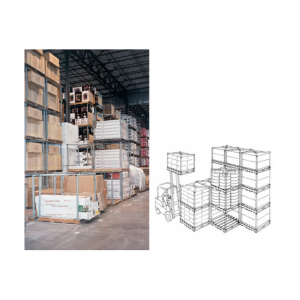
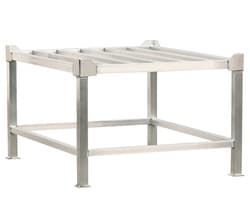
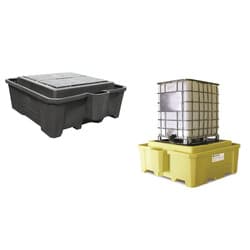
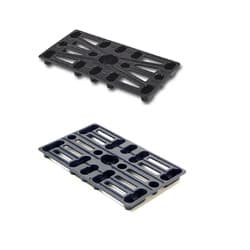
How to Choose the Right Industrial Pallets
Choosing the right industrial pallet for your facility starts with understanding the type of products you handle, the weight of your loads, and how goods move through your warehouse or distribution network. Consider the pallet's dimensions, load capacity, fork-entry configuration, stacking requirements, and compatibility with your existing pallet racks, pallet jacks, and forklifts. Selecting the appropriate pallet helps improve handling efficiency, protect products, and make better use of available storage space.
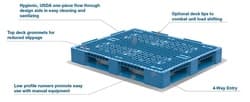
Plastic pallets are a practical option for many industrial and distribution environments because they resist moisture, rust, and corrosion. Certain models feature injection-molded construction designed to provide durability while reducing pallet weight. For example, Janeice Products offers stackable and nestable plastic pallets designed around a standard 48" x 45" AIAG footprint, making them suitable for compatible automotive and industrial material handling applications. Check the specifications of each model to confirm the required dimensions and load capacity.
For facilities that need to transport goods frequently, stackable pallets can help create stable loads and support organized storage when used according to the manufacturer's specifications. Nestable pallets are designed to fit inside one another when empty, reducing the space required for storage and return transportation. Some pallet systems also offer compatible top caps and cargo-securing accessories for specific applications.
Before ordering, confirm the pallet's length, width, height, load rating, and fork-entry configuration. If your facility uses pallet racking, verify that the pallet is approved for the intended rack application. Also consider whether your operation requires hygienic surfaces, reusable packaging, secure cargo strapping, or space-saving storage for empty pallets.
Key Features to Look for in Industrial Pallets
-
Load Capacity: Match the pallet's rated capacity to the weight of your products. Check the manufacturer's specifications for static, dynamic, and racking capacities where applicable.
-
Material and Durability: Plastic pallets can offer resistance to moisture, rust, and corrosion. Choose a design suitable for your operating environment and expected handling conditions.
-
Pallet Dimensions: Select a pallet that fits your products, warehouse layout, conveyor systems, and transportation requirements. Confirm the exact dimensions before ordering.
-
Fork Entry: Two-way and four-way entry designs provide different access options for forklifts and pallet handling equipment. Choose a configuration compatible with your operation.
-
Stackability: Stackable pallets can help organize loaded goods and improve storage efficiency when used within the manufacturer's load and stacking limits.
-
Nestability: Nestable pallets fit inside one another when empty, helping reduce the storage space and transportation volume required for return shipments.
-
Top Caps and Accessories: Some pallet models offer compatible top caps or cargo-securing accessories. Confirm compatibility with the specific pallet model before ordering.
-
Warehouse Compatibility: Verify compatibility with pallet racks, forklifts, pallet jacks, conveyors, and other material handling equipment used in your facility.
Industries That Use Industrial Pallets
-
Warehousing & Distribution: Store, organize, and move inventory efficiently between receiving, storage, picking, and dispatch areas.
-
Manufacturing: Transport raw materials, components, and finished products between production lines and storage locations.
-
Automotive: Handle automotive parts and components using pallet dimensions and configurations appropriate for the operation.
-
Logistics & Transportation: Support the movement of packaged goods between distribution centers, shipping facilities, and delivery locations.
-
Food & Beverage: Use suitable pallets for transporting packaged food, beverages, and supplies. Select materials and designs that meet your facility's hygiene requirements.
-
Pharmaceuticals & Healthcare: Support the storage and transportation of packaged medical supplies and products using pallets suitable for the applicable handling and cleanliness requirements.
-
Retail & E-commerce: Move cartons, bulk inventory, and packaged merchandise through fulfillment centers and distribution facilities.
-
Construction & Industrial Supply: Transport packaged materials, equipment, and supplies within warehouses and industrial yards using appropriately rated pallets.
Frequently Asked Questions About Industrial Pallets
Q1: What are industrial pallets used for?
Industrial pallets provide a stable base for storing, handling, and transporting goods. They allow products to be moved using compatible forklifts, pallet jacks, and other material handling equipment. Pallets are commonly used in warehouses, manufacturing facilities, distribution centers, and shipping operations.
Q2: What is the difference between stackable and nestable pallets?
Stackable pallets are designed to be stacked in an appropriate configuration to support organized storage and handling. Nestable pallets fit inside one another when empty, helping reduce storage space and return-shipping volume. The best option depends on whether your priority is handling loaded goods, storing empty pallets, or optimizing transportation efficiency.
Q3: Are plastic pallets suitable for industrial applications?
Yes. Industrial plastic pallets are used in many warehouse, manufacturing, and distribution environments. They can offer moisture resistance, corrosion resistance, and durable construction. However, suitability depends on the pallet design, load rating, operating environment, and intended handling method. Always check the manufacturer's specifications before use.
Q4: How do I choose the correct pallet size?
Start by measuring the length, width, and height of your packaged goods and determining how the load will be arranged. Then verify compatibility with your warehouse racks, forklifts, pallet jacks, conveyors, and shipping requirements. Standardized pallet footprints can simplify handling when they match your existing equipment and supply chain.
Q5: What pallet load capacity do I need?
The required capacity depends on the total weight of the goods and how the pallet will be supported and moved. Consider static capacity for stationary storage, dynamic capacity for handling and movement, and racking capacity for supported storage in pallet racks. These ratings are not interchangeable. Consult the manufacturer's specifications and never exceed the applicable load limits.
Q6: Can industrial pallets be reused?
Many industrial pallets are designed for repeated use, depending on their construction, application, and condition. Reusable pallets can support returnable packaging systems and recurring transportation operations. Inspect pallets regularly for cracks, deformation, or other damage, and follow the manufacturer's maintenance and replacement guidance.
Q7: Do industrial pallets come with accessories?
Certain pallet models offer compatible accessories, such as top caps or cargo-securing options. Availability varies by model. For example, Janeice Products lists top caps and a seatbelt option for a specific stackable pallet system. Review the product details to confirm which accessories are compatible with your selected pallet. (View pallet product details)
Q8: How can I save space when storing empty pallets?
Nestable pallets can help reduce the space occupied by empty pallets because they fit inside one another. This can be useful for warehouses, distribution centers, and operations that return empty pallets after deliveries. Compare the nesting design, dimensions, and storage requirements of available models to determine which option best suits your facility.