
 Deals Of The Day
 Top Sellers
 Top Trending
 New Arrivals
 Shop By Brands
Pallets & Equipment Lifts
Shop industrial pallet lifts and lifting equipment at Janeice Products Co Inc, your trusted material handling supply source based in Aiken, South Carolina. Whether you need hydraulic scissor lift tables for lifting heavy loads, equipment for positioning pallets at convenient working heights, or industrial lifting solutions for manufacturing and warehouse operations, our catalog offers professional-grade equipment for demanding material handling applications. Designed to support efficient lifting, load positioning, and workplace productivity, our lifting equipment helps warehouses, distribution centers, manufacturing plants, and maintenance facilities handle materials more efficiently while reducing unnecessary bending and manual lifting.
How to Choose the Right Pallet Lifts and Lifting Equipment
Choosing the right pallet lift or industrial lifting equipment starts with understanding the weight, dimensions, and handling requirements of the loads you need to move. Consider the maximum load capacity, required lifting height, platform dimensions, available floor space, and frequency of operation. Selecting equipment that matches your application helps improve material handling efficiency and supports safer workplace practices.
For manufacturing and assembly operations, hydraulic scissor lift tables can raise materials to a convenient working height, reducing repetitive bending and helping employees position components more efficiently. Janeice Products offers industrial-duty scissor lift tables with features such as heavy-duty steel construction, hydraulic cylinders, and options for specialized platform configurations.
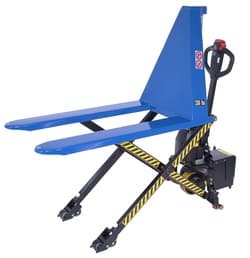
For pallet handling and warehouse operations, consider whether you need a stationary lifting platform, mobile lifting equipment, or a powered pallet truck. Each option serves a different purpose. Lift tables are useful for raising and positioning loads, while pallet trucks are designed primarily to transport pallets across a facility. Powered pallet trucks can be suitable for operations that require frequent movement of heavy palletized loads.
Before ordering, verify the equipment's rated capacity, maximum and minimum lifting heights, platform or fork dimensions, power requirements, and operating controls. Also consider floor conditions, aisle width, loading frequency, and any installation requirements. For pit-mounted or specialized applications, confirm that the selected model supports the intended configuration.
Key Features to Look for in Pallet Lifts and Lifting Equipment
-
Load Capacity: Choose equipment rated for the maximum weight of your load, including any containers, pallets, fixtures, and accessories.
-
Lifting Height: Check the lowered height, raised height, and total lifting travel to ensure the equipment meets your workflow requirements.
-
Platform or Fork Dimensions: Match the platform size or fork dimensions to the pallets, containers, and materials you handle.
-
Construction and Durability: Look for industrial-grade steel construction and suitable hydraulic components for demanding material handling environments.
-
Operating Controls: Consider foot controls, hand controls, or powered controls according to the equipment model and the needs of your operators.
-
Mobility: Determine whether a stationary lift table, mobile lifting unit, or powered pallet truck is best suited to your facility.
-
Ergonomic Design: Select equipment that helps reduce repetitive bending, awkward lifting, and unnecessary manual handling.
-
Safety Features: Check for appropriate guarding, overload protection where provided, emergency controls, and manufacturer-recommended operating procedures.
-
Power Requirements: For powered equipment, confirm the voltage, battery configuration, charging requirements, and available electrical supply.
-
Installation and Maintenance: Review floor loading, mounting requirements, inspection schedules, and service accessibility before installation.
Industries That Use Pallet Lifts and Lifting Equipment
-
Manufacturing: Raise components, work-in-process materials, and production supplies to convenient working heights on assembly lines.
-
Warehousing & 3PL: Support pallet handling, load positioning, and material movement in distribution and fulfillment facilities.
-
Automotive: Position components, parts containers, and production materials for assembly, inspection, and maintenance work.
-
Packaging & Distribution: Raise products to suitable working heights during packing, sorting, and pallet preparation.
-
Construction & MRO: Assist with positioning heavy materials, equipment, and maintenance supplies in workshops and industrial service areas.
-
Food & Beverage: Support material handling and production workflows when equipment specifications meet the facility's hygiene and operating requirements.
-
Retail & Wholesale Distribution: Improve the handling of bulk merchandise, palletized inventory, and incoming shipments.
-
Industrial Maintenance: Raise equipment components and materials for servicing, inspection, and repair operations when the selected equipment is suitable for the application.
Frequently Asked Questions About Pallet Lifts and Lifting Equipment
Q1: What are pallet lifts and lifting equipment used for?
Pallet lifts and industrial lifting equipment are used to raise, lower, and position materials for storage, production, loading, unloading, and other material handling tasks. Depending on the equipment type, they can support palletized loads, industrial components, containers, and work-in-process materials.
Q2: What is the difference between a scissor lift table and a pallet truck?
A scissor lift table raises a load vertically to a desired working or transfer height. A pallet truck is primarily designed to lift a pallet enough to move it horizontally across a facility. Powered pallet trucks use battery-powered drive and lifting systems, while scissor lift tables are generally selected for load positioning and height adjustment.
Q3: How do I determine the load capacity required for a pallet lift?
Calculate the combined weight of the materials, pallet, containers, and any fixtures placed on the equipment. Choose a model whose rated capacity accommodates the full load and complies with the manufacturer's loading instructions. Also verify load distribution and any center-of-gravity restrictions rather than relying on weight alone.
Q4: Are hydraulic scissor lift tables suitable for manufacturing facilities?
Yes. Industrial hydraulic scissor lift tables can help position materials at convenient working heights in manufacturing, assembly, and material handling environments. Specific models offer different platform sizes, lifting travel, and load capacities. Review the manufacturer's specifications to determine whether a model is suitable for your application.
Q5: What lifting height should I choose?
The required lifting height depends on the starting height of your load and the height needed for loading, unloading, assembly, or transfer. Check both the fully lowered and fully raised heights, along with the available lifting travel, to ensure the equipment fits your workflow and surrounding workspace.
Q6: What safety considerations apply when using industrial lifting equipment?
Always operate equipment within its rated capacity and follow the manufacturer's instructions. Keep personnel clear of moving platforms and pinch points, secure loads appropriately, and use required guarding and safety devices. Operators should receive appropriate training, and equipment should be inspected and maintained according to the manufacturer's recommendations and applicable workplace safety requirements.
Q7: Can I order pallet lifts and lifting equipment for specialized industrial applications?
Janeice Products offers industrial material handling equipment for a range of lifting and positioning requirements. The appropriate model depends on your load capacity, platform dimensions, lifting height, operating method, and installation conditions. For specialized applications, review the product specifications and contact Janeice Products at +1 803-652-3025 or submit a quote request through the website to discuss your requirements.