
 Deals Of The Day
 Top Sellers
 Top Trending
 New Arrivals
 Shop By Brands
Pallets & Equipment Jacks
Shop industrial pallet jacks at Janeice Products Co Inc, your trusted material handling supply source based in Aiken, South Carolina. Whether you need manual pallet jacks for everyday warehouse operations, electric pallet trucks for moving heavy loads, or powered pallet trucks for high-volume material handling, our catalog offers solutions designed to support efficient pallet transportation. Ideal for warehouses, distribution centers, manufacturing plants, shipping facilities, and industrial workspaces, our pallet handling equipment helps businesses move palletized goods, improve workflow efficiency, and reduce manual handling requirements.
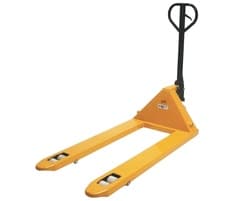
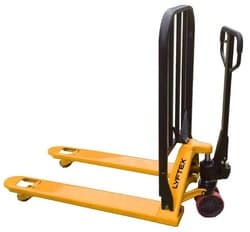
How to Choose the Right Pallet Jack
Choosing the right pallet jack for your facility starts with understanding the weight of your loads, the type of pallets you handle, and the distance materials need to travel. Consider the maximum load capacity, fork dimensions, lifting height, turning radius, and available operating space. Selecting equipment that matches your daily material handling requirements can improve productivity and help maintain safe warehouse operations.
Manual pallet jacks are suitable for moving palletized goods over short distances in warehouses, retail stockrooms, loading areas, and smaller facilities. They provide a straightforward solution for everyday material handling without requiring a powered drive system. For higher-volume operations or frequent transportation of heavier loads, electric pallet trucks can reduce the physical effort required from operators and support more efficient movement throughout the facility.
Fork dimensions and pallet compatibility are equally important. Standard pallets and specialized pallet designs may require different fork widths or lengths. Before purchasing, check the pallet entry configuration, fork spacing, load capacity, and available clearance in your storage areas. Narrow aisles, tight corners, loading docks, and congested warehouse layouts may also influence which pallet jack is most suitable.
For demanding operations, powered pallet trucks offer additional features such as electric lifting and lowering controls, forward and reverse speed controls, safety horns, and emergency reverse buttons on applicable models. Janeice Products offers fully powered electric pallet trucks with different fork configurations and load capacities, including selected models rated for loads up to 4,500 pounds. Always review individual product specifications to confirm the appropriate equipment for your application.
Key Features to Look for in Industrial Pallet Jacks
-
Load Capacity: Select a pallet jack rated to handle the maximum weight of your typical loads. Never exceed the manufacturer's specified capacity.
-
Fork Dimensions: Check fork length, width, and spacing to ensure compatibility with your pallets and load configuration.
-
Manual or Electric Operation: Manual pallet jacks are suitable for many short-distance tasks, while electric pallet trucks are useful for frequent transportation and higher-volume operations.
-
Lifting Height: Confirm that the lifting range is sufficient to raise pallets for transportation and positioning.
-
Wheel and Caster Design: Consider wheel material, floor conditions, maneuverability, and turning requirements when choosing equipment for your facility.
-
Operating Space: Evaluate aisle width, turning radius, dock access, and available storage space before selecting a model.
-
Operator Safety: For powered models, look for appropriate controls, emergency reverse features, horns, and other manufacturer-provided safety features.
-
Battery and Charging: For electric pallet trucks, review battery voltage, expected operating time, charging requirements, and the availability of suitable charging facilities.
Industries That Use Pallet Jacks
-
Warehousing & Distribution: Move palletized inventory between receiving areas, storage locations, picking zones, and dispatch areas.
-
Manufacturing: Transport raw materials, components, and finished products between production lines and storage areas.
-
Shipping & Logistics: Move palletized shipments through loading, unloading, staging, and freight handling operations.
-
Retail & Wholesale: Replenish stockrooms, transport bulk merchandise, and move incoming deliveries.
-
Food & Beverage: Handle palletized ingredients, packaged goods, and finished products in suitable warehouse and distribution environments.
-
Automotive & Industrial Supply: Move heavy components, packaged parts, and supplies across workshops and industrial storage facilities.
-
Third-Party Logistics (3PL): Support frequent pallet movement, order fulfillment, cross-docking, and inventory transfers.
Frequently Asked Questions About Industrial Pallet Jacks
Q1: What is an industrial pallet jack used for?
An industrial pallet jack is used to lift pallets slightly off the floor and transport palletized goods over short distances. It is commonly used in warehouses, distribution centers, manufacturing facilities, shipping areas, and retail stockrooms.
Q2: What is the difference between a manual pallet jack and an electric pallet jack?
A manual pallet jack uses a hand-operated hydraulic mechanism to lift loads and requires the operator to move the equipment manually. An electric pallet jack uses a powered drive system to move loads, reducing the physical effort required for transportation. Electric models are often suitable for operations involving frequent pallet movements or longer travel distances.
Q3: How much weight can a pallet jack carry?
Pallet jack capacity varies by model. Some manual units are designed for lighter applications, while heavy-duty and powered pallet trucks can handle substantially larger loads. Janeice Products lists fully powered electric pallet truck models with capacities of up to 4,500 pounds. Always verify the rated capacity of the specific model before use.
Q4: How do I choose the correct pallet jack fork size?
Choose fork dimensions based on your pallet size, pallet entry direction, load dimensions, and available operating space. Check the fork length, outside fork width, and spacing between forks against the pallets you use most frequently. For nonstandard pallets, confirm compatibility with the equipment manufacturer before ordering.
Q5: Are electric pallet jacks suitable for busy warehouses?
Yes. Electric pallet trucks can be a practical choice for busy warehouses that require frequent pallet movement. Powered travel controls and electric lifting functions on applicable models can help reduce manual effort and support efficient material handling. Battery runtime, charging requirements, load capacity, and aisle layout should all be considered when selecting a model.
Q6: What safety precautions should I follow when using a pallet jack?
Always inspect the equipment before use, check the load weight, position the forks correctly, and keep the load stable during transportation. Travel at a controlled speed, maintain clear visibility, and avoid exceeding the rated capacity. For powered equipment, follow the manufacturer's operating instructions, use the designated safety features, and ensure operators receive appropriate training.
Q7: Can pallet jacks be used on uneven floors or ramps?
Pallet jacks perform best on suitable, relatively smooth surfaces. Uneven floors, steep ramps, damaged pavement, and slippery areas can affect stability, braking, and maneuverability. Check the manufacturer's operating guidelines and restrictions before using a pallet jack on ramps or uneven surfaces. Select equipment specifically approved for the conditions in your facility.