
 Deals Of The Day
 Top Sellers
 Top Trending
 New Arrivals
 Shop By Brands
Ladders Rolling Ladders
Shop industrial rolling ladders at Janeice Products Co Inc, your trusted material handling supply source based in Aiken, South Carolina. Whether you need mobile warehouse ladders for picking inventory, rolling step ladders for manufacturing workstations, or foldable rolling ladders for convenient storage and transportation, our catalog includes professional-grade access solutions for industrial and commercial environments. Designed to support safe access to elevated shelves, equipment, and work areas, rolling ladders are ideal for warehouses, distribution centers, manufacturing plants, maintenance departments, and inventory management operations. Explore different ladder heights, step configurations, tread styles, and mobility options to find the right solution for your facility.
How to Choose the Right Rolling Ladder
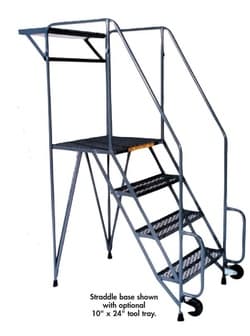
Choosing the right rolling ladder for your facility starts with understanding the working height, frequency of use, and type of surface where the ladder will operate. Consider the height of warehouse shelving, storage racks, machinery, and elevated work areas that employees need to access. Select a ladder with an appropriate top-step height and enough steps to provide comfortable access without overreaching.
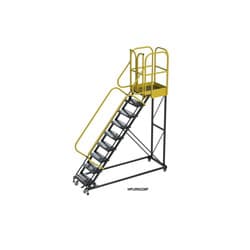
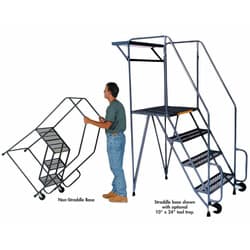
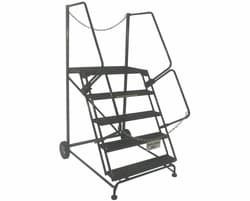
Mobility is another important consideration. Rolling ladders equipped with spring-loaded casters allow the wheels to retract under the user's weight, helping keep the ladder stationary during use. For example, Janeice Products offers spring-loaded caster ladders with different step heights, tread configurations, and optional handrails.
For facilities that need to move ladders between storage aisles or workstations, foldable rolling ladders provide convenient portability and compact storage. The Fold-N-Store rolling ladder features large rubber wheels, a foldable design, and a 350 lb. capacity, with different tread options available.
Before purchasing, check the ladder's rated load capacity, platform or top-step height, base dimensions, tread material, handrail configuration, and wheel design. Also evaluate the available floor space, aisle width, and intended application to ensure the ladder fits your workplace requirements.
Key Features to Look for in Industrial Rolling Ladders
-
Load Capacity: Choose a ladder with a rated capacity that accommodates the user and any tools or materials being carried. Never exceed the manufacturer's specified limit.
-
Working Height: Select the appropriate top-step height and number of steps for your shelving, inventory, or equipment access requirements.
-
Caster and Wheel Design: Spring-loaded casters can retract under the user's weight, while larger wheels on certain foldable models help with repositioning.
-
Tread Type: Depending on the model, options may include expanded metal, serrated grating, perforated steps, or abrasive-mat treads. Select a tread appropriate for the work environment.
-
Handrails: Choose handrails where required by the application and applicable safety standards to provide additional support while climbing.
-
Portability: Foldable designs can simplify transportation and storage when ladders need to be moved between work areas.
-
Base Dimensions: Verify the ladder's footprint and turning clearance to ensure it can move through warehouse aisles and fit into the intended workspace.
-
Safety Compliance: Review the manufacturer's specifications and applicable OSHA and ANSI requirements for the selected ladder and its intended use.
Industries That Use Rolling Ladders
-
Warehousing & 3PL: Access elevated inventory, picking locations, and storage racks in distribution facilities.
-
Manufacturing: Reach production supplies, equipment, components, and elevated workstation storage.
-
Retail & Distribution: Retrieve merchandise and replenish stock on high shelving in stockrooms and distribution areas.
-
Automotive: Access parts storage, workshop supplies, and selected elevated maintenance areas.
-
Construction & MRO: Support suitable maintenance and repair tasks that require access to elevated storage or equipment.
-
E-commerce Fulfillment: Help warehouse employees reach products stored on higher shelves during order-picking operations.
-
Industrial Facilities: Provide mobile access to designated storage areas, machinery, and maintenance supplies where the selected ladder is appropriate.
Frequently Asked Questions About Rolling Ladders
Q1: What are rolling ladders used for?
Rolling ladders provide mobile access to elevated shelves, inventory, equipment, and work areas. They are commonly used in warehouses, manufacturing facilities, stockrooms, and industrial workplaces where employees regularly need to reach items stored above floor level.
Q2: What is the difference between a rolling ladder and a standard step ladder?
A standard step ladder is generally designed to be opened and positioned for use, while a rolling ladder includes wheels or casters to make repositioning easier. Some rolling ladder designs use spring-loaded casters that retract under the user's weight, while other models feature larger wheels for portability. The appropriate design depends on the application and the manufacturer's operating instructions.
Q3: What load capacity should I choose for a rolling ladder?
Choose a ladder based on the manufacturer's rated capacity, including the user's weight and any tools or materials being carried. Janeice Products offers different models with different capacity ratings. For example, the Fold-N-Store rolling ladder has a listed capacity of 350 lb., while certain spring-loaded caster ladder models have a listed capacity of 450 lb. Always verify the specifications of the exact model before ordering.
Q4: Are rolling ladders available with different step heights and tread options?
Yes. Depending on the model, rolling ladders are available with different numbers of steps, top-step heights, and tread configurations. Options can include expanded metal, serrated grating, perforated steps, and abrasive-mat treads. Review the individual product specifications to identify the available combinations.
Q5: Are foldable rolling ladders available for easy storage?
Yes. Certain models, such as the Fold-N-Store rolling ladder, are designed to fold for storage or transportation. Their portable design can be useful for facilities that need to move ladders between work areas or store them when they are not in use.
Q6: What safety features should I consider when buying a rolling ladder?
Consider the rated load capacity, tread design, handrails, caster mechanism, base stability, and suitability for the intended working environment. Follow the manufacturer's instructions for moving, positioning, and using the ladder. Ensure the ladder is properly secured for climbing and complies with applicable workplace safety requirements.
Q7: How do I select the correct rolling ladder for my warehouse?
Measure the height of the shelves or storage locations you need to reach and evaluate aisle width, floor conditions, available storage space, and how frequently the ladder will be repositioned. Compare top-step height, number of steps, load capacity, tread options, and wheel configuration. For frequent inventory picking, choose a model designed for the required access height and intended warehouse use.