
 Deals Of The Day
 Top Sellers
 Top Trending
 New Arrivals
 Shop By Brands
Hoppers Self Dumping
Shop self-dumping hoppers at Janeice Products Co Inc, your trusted material handling supply source based in Aiken, South Carolina. Whether you need industrial hoppers for collecting scrap metal, handling manufacturing waste, transporting bulk materials, or managing debris in warehouses and production facilities, our catalog offers material handling solutions designed to support efficient collection, movement, and unloading. With options for different capacities, heavy-duty steel construction, caster configurations, and specialized dumping mechanisms, our self-dumping hoppers help businesses streamline material handling operations, reduce manual handling, and improve workplace productivity.
How to Choose the Right Self-Dumping Hopper
Choosing the right self-dumping hopper for your facility starts with understanding the type of material you need to handle, the required load capacity, and how materials move through your operation. Consider whether you will be collecting scrap metal, manufacturing waste, wood chips, construction debris, or other bulk materials. The hopper should have sufficient volume and weight capacity to handle the material safely without exceeding its rated limits.
Capacity and material density are important factors when selecting a hopper. Lightweight materials may fill a large hopper before reaching its maximum weight capacity, while dense materials such as metal scrap can reach the weight limit with much less volume. Evaluate both the cubic-yard capacity and the maximum rated load to select a suitable model for your application.
The dumping mechanism is another key consideration. Self-dumping hoppers are designed to help operators discharge collected materials with less manual handling. Select a model with a release and reset mechanism appropriate for your workflow, and verify that it is compatible with the equipment used in your facility. For operations requiring movement between workstations, caster-equipped hoppers can provide additional mobility. Janeice Products also offers caster options for different hopper capacities and operating requirements.
Before ordering, confirm the hopper's overall dimensions, loading height, discharge clearance, and compatibility with your material handling equipment. Allow sufficient space for the hopper to move, tilt, discharge its contents, and return to its operating position safely.
Key Features to Look for in Self-Dumping Hoppers
-
Load Capacity: Select a hopper with a rated load capacity suitable for the weight and density of the materials being handled. Never exceed the manufacturer's maximum capacity.
-
Hopper Volume: Compare cubic-yard capacity with your expected material volume to reduce unnecessary trips for waste collection and disposal.
-
Construction: Heavy-duty steel construction is suitable for many demanding industrial applications involving scrap, debris, and bulk materials. Choose a design appropriate for the material and operating environment.
-
Dumping Mechanism: Look for a self-dumping mechanism that supports controlled unloading and convenient resetting. Follow the manufacturer's operating instructions.
-
Caster Options: Caster-equipped hoppers can improve mobility across suitable facility surfaces. Ensure the caster load rating meets or exceeds the required load and hopper configuration.
-
Forklift Compatibility: Check fork pocket dimensions, fork spacing, and the equipment's rated lifting capacity before selecting a hopper for forklift handling.
-
Safety and Stability: Consider the hopper's center of gravity, loaded stability, dumping clearance, and the manufacturer's operating and maintenance requirements.
-
Accessories: Depending on the model, accessories such as lids, specialized bases, and caster options can help meet specific material handling requirements. Confirm compatibility with the selected hopper before ordering.
Industries That Use Self-Dumping Hoppers
-
Manufacturing: Collect production scrap, metal offcuts, rejected materials, and manufacturing waste near assembly lines and production equipment.
-
Warehousing and Distribution: Manage packaging waste, damaged pallets, discarded materials, and general operational debris.
-
Construction: Collect suitable construction debris, demolition waste, and other bulk materials for transfer to designated disposal areas.
-
Automotive: Handle metal scrap, machining waste, manufacturing by-products, and maintenance debris in production and service facilities.
-
Recycling and Waste Management: Collect and transport recyclable materials, scrap metal, and selected waste streams for sorting and processing.
-
Metalworking and Fabrication: Gather metal cuttings, stamping scrap, and fabrication waste while improving housekeeping around workstations.
-
Maintenance and Repair Operations (MRO): Consolidate workshop waste, replacement components, and other discarded materials for organized removal.
Frequently Asked Questions About Self-Dumping Hoppers
Q1: What is a self-dumping hopper used for?
A self-dumping hopper is an industrial material handling container designed to collect, transport, and discharge bulk materials. Common applications include handling scrap metal, manufacturing waste, construction debris, and recyclable materials. Its dumping mechanism helps simplify unloading and reduce the need for manual material transfer.
Q2: How do self-dumping hoppers work?
A self-dumping hopper is loaded with material and moved to the designated discharge location using compatible material handling equipment. The operator activates the model's dumping mechanism according to the manufacturer's instructions, allowing the hopper to tip and release its contents. The hopper is then reset and secured before being returned to service. The exact operation depends on the hopper design.
Q3: How do I choose the correct hopper capacity?
Consider both the volume of material you expect to collect and its weight. Compare the hopper's cubic-yard capacity with the quantity generated during each work cycle, then verify that the total load remains within the manufacturer's rated capacity. Dense materials may reach the weight limit well before the hopper is full.
Q4: Can self-dumping hoppers be moved around a facility?
Yes. Depending on the model, hoppers may be moved using compatible forklifts or equipped with casters for rolling mobility. Janeice Products offers caster options, including different wheel materials and load ratings. Confirm that the selected casters, hopper base, floor surface, and intended load are compatible before use.
Q5: Are self-dumping hoppers suitable for heavy industrial materials?
Many self-dumping hoppers are designed for demanding industrial material handling applications. However, suitability depends on the hopper's rated capacity, construction, design, and the characteristics of the material being handled. Always check the individual product specifications before using a hopper for heavy scrap, dense materials, or abrasive waste.
Q6: What should I check before ordering a self-dumping hopper?
Before purchasing, review the hopper's load capacity, cubic-yard volume, dimensions, loading height, fork pocket specifications, dumping mechanism, and any required caster or base options. Also verify the available discharge clearance and compatibility with your existing equipment. For specialized or high-volume applications, contact Janeice Products to discuss your operational requirements.
Q7: Are lids available for self-dumping hoppers?
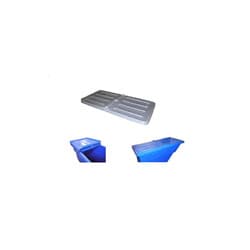
Compatible lids are available for certain hopper models. For example, Janeice Products lists heavy-duty polyethylene lids for its Bumper Release Steel Hoppers HD series. These lids help cover the hopper contents when the hopper is not being loaded or discharged. Check the specific hopper series and lid compatibility before ordering.
Q8: How can self-dumping hoppers improve workplace efficiency?
Self-dumping hoppers help consolidate bulk materials at the point of generation and simplify their transfer to designated collection or disposal areas. By reducing repeated manual handling and supporting organized material movement, they can improve housekeeping and workflow efficiency. Appropriate capacity selection, safe operating procedures, and regular equipment inspections remain essential for effective use.