
 Deals Of The Day
 Top Sellers
 Top Trending
 New Arrivals
 Shop By Brands
Hoists & Equipment Air
Shop industrial air hoists at Janeice Products Co Inc, your trusted material handling supply source based in Aiken, South Carolina. Whether you need pneumatic hoists for lifting heavy loads, positioning components on production lines, or handling materials in demanding industrial environments, our catalog helps you find lifting equipment suited to your operational requirements. Air-powered hoists use compressed air to raise and lower loads, making them a practical choice for applications that require reliable lifting performance, precise load positioning, and frequent operation. Explore air hoist solutions for manufacturing facilities, warehouses, maintenance departments, fabrication shops, and industrial workplaces throughout the United States.
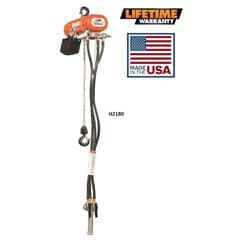
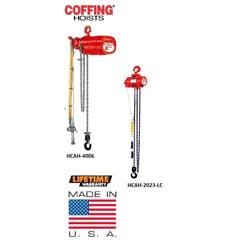
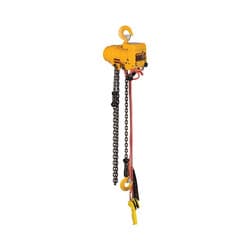
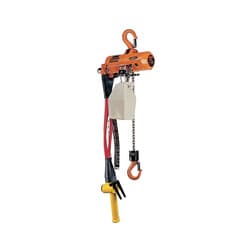
How to Choose the Right Industrial Air Hoist
Choosing the right industrial air hoist starts with understanding the weight of the load, lifting height, operating frequency, and conditions in your facility. Air hoists, also known as pneumatic hoists, use compressed air to lift and lower materials. They are commonly considered for industrial applications where frequent lifting, dependable operation, and controlled load handling are important.
Load capacity is one of the most important factors when selecting an air hoist. Determine the maximum weight of the materials you will lift and select equipment with a rated capacity suitable for that load. Never exceed the manufacturer's specified working load limit. Also consider the dimensions and shape of the materials, their lifting points, and the accessories required to handle them safely.
The compressed-air supply is another critical consideration. Verify that your facility can provide the air pressure, airflow, and connection requirements specified by the hoist manufacturer. The available air supply must be sufficient for the hoist to operate as intended, particularly in applications involving repeated lifting cycles.
Your operating environment also influences the selection process. Pneumatic hoists may be suitable for demanding production areas, assembly operations, fabrication facilities, and other industrial environments. For locations with specific hazardous-area requirements, confirm that the complete hoist installation is appropriately rated and approved for the intended application.
Before purchasing, evaluate the required lifting height, control arrangement, suspension method, operating speed, duty cycle, and maintenance requirements. Choosing equipment that matches your workflow helps support productive material handling and safe lifting operations.
Key Features to Look for in Industrial Air Hoists
-
Load Capacity: Select a hoist with a rated working load limit that meets your lifting requirements. Consider the heaviest intended load and follow the manufacturer's instructions.
-
Lifting Height: Check the required vertical travel distance and confirm that the available chain or lifting medium provides sufficient usable height.
-
Air Pressure and Consumption: Verify the manufacturer's specified operating pressure, airflow requirements, and compressed-air connection size against your facility's air supply.
-
Lifting Speed: Consider the required lifting and lowering speed based on production volume, load positioning, and the nature of your operation.
-
Duty Cycle: For frequent or continuous industrial lifting, select equipment rated for the intended operating frequency and workload.
-
Control System: Evaluate pendant controls, push-button operation, and other available control arrangements to ensure the operator can manage lifting and lowering effectively.
-
Suspension and Mounting: Confirm compatibility with the supporting structure, trolley, crane, or workstation. The supporting structure must be rated for the complete lifting system and its loads.
-
Safety Features: Check for appropriate overload protection, emergency stopping arrangements, load-control features, and other safety mechanisms specified for the selected model.
-
Maintenance Requirements: Review lubrication, inspection, air filtration, and servicing requirements to support dependable long-term operation.
Industries That Use Industrial Air Hoists
-
Manufacturing: Lift components, machine parts, tooling, and materials during assembly and production operations.
-
Automotive: Position engines, mechanical components, and other heavy parts during manufacturing, maintenance, and repair activities.
-
Warehousing and Distribution: Support the lifting and positioning of suitable materials in industrial handling areas equipped with compatible lifting systems.
-
Metal Fabrication: Handle metal components, fabricated assemblies, and workpieces during production and processing.
-
Machinery and Equipment Maintenance: Assist with removing, installing, and positioning machine components during maintenance and repair.
-
Aerospace and Aviation: Support the controlled handling of components and assemblies when the equipment and lifting procedures meet the applicable requirements.
-
Industrial Processing: Provide lifting support for production equipment, components, and materials in suitable processing environments.
-
Assembly and Production Lines: Help operators position parts and assemblies accurately during repetitive manufacturing tasks.
Frequently Asked Questions About Industrial Air Hoists
Q1: What is an air hoist?
An air hoist is a lifting device powered by compressed air rather than an electric motor. It is used to raise, lower, and position loads in industrial environments. Depending on the model, air hoists may offer different lifting capacities, speeds, suspension arrangements, and control options.
Q2: What is the difference between an air hoist and an electric hoist?
An air hoist uses compressed air as its power source, while an electric hoist uses electrical power. The appropriate option depends on the available utilities, lifting frequency, operating environment, required performance, maintenance capabilities, and any applicable hazardous-area requirements. Compare the specifications of individual models before choosing between the two types.
Q3: How do I determine the correct capacity for an air hoist?
Start by identifying the maximum load you intend to lift, including any relevant lifting attachments. Select a hoist with a rated capacity appropriate for the application, and ensure the supporting structure, trolley, hooks, slings, and other lifting accessories are also adequately rated. Never use a hoist beyond its specified working load limit.
Q4: What air supply is required for a pneumatic hoist?
The required air pressure, airflow, and connection specifications vary by model. Check the manufacturer's technical documentation and confirm that your compressor, air lines, filtration equipment, and connections can provide the required supply during operation. An inadequate air supply can affect lifting performance.
Q5: Can air hoists be used in hazardous environments?
Some pneumatic hoists are designed for specific hazardous or potentially explosive environments, but not every air hoist is suitable for these applications. Verify the equipment's certifications, ratings, and limitations against the requirements of the installation. The entire lifting system and operating procedures must meet the applicable safety standards.
Q6: What maintenance does an air hoist require?
Maintenance requirements vary by manufacturer and model. Common considerations include inspecting hooks, chains, load-bearing components, controls, and suspension points; checking the compressed-air supply; and performing lubrication and servicing as directed by the manufacturer. Remove damaged or defective equipment from service until it has been appropriately inspected and repaired.
Q7: How do I choose between different air hoist models?
Compare rated load capacity, lifting height, lifting speed, operating pressure, airflow consumption, duty rating, control type, mounting arrangement, and safety features. Also consider the intended working environment, maintenance requirements, and compatibility with your existing material handling equipment. Review the product specifications or contact Janeice Products for assistance identifying an appropriate solution for your application.