
 Deals Of The Day
 Top Sellers
 Top Trending
 New Arrivals
 Shop By Brands
Forklift Equipment Containers
Shop industrial forklift containers at Janeice Products Co Inc, your trusted material handling supply source based in Aiken, South Carolina. Whether you need stackable pallet containers for warehouse storage, stack-and-nest containers for efficient material transport, or collapsible bulk containers for handling large volumes of goods, our catalog offers practical solutions for industrial storage and material movement. Designed for applications across manufacturing facilities, warehouses, distribution centers, and production environments, these containers help businesses organize materials, optimize storage space, and support efficient forklift handling. Explore our range of industrial containers in different sizes, capacities, and configurations to find the right solution for your operational requirements.
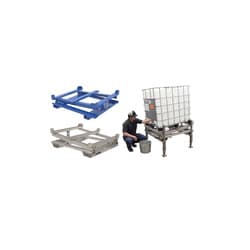
How to Choose the Right Forklift Containers
Choosing the right forklift container for your facility starts with understanding the type, weight, volume, and movement requirements of the materials you handle. Consider the container's load capacity, overall dimensions, internal storage space, fork-entry configuration, and compatibility with your existing pallets and material handling equipment. Selecting the right container can help improve warehouse organization, simplify transportation, and reduce unnecessary handling.
For warehouse storage and manufacturing operations, stackable pallet containers are useful for organizing bulk materials and maximizing vertical storage space. Certain models are designed to stack with or without optional lids and feature two-way forklift entry for handling with compatible equipment. Verify the container's rated capacity and stacking requirements before loading or stacking containers. <Cite refs={["turn462620search1"]}/>
For operations that regularly move goods between production areas, warehouses, and distribution facilities, stack-and-nest containers offer a space-saving solution. These containers can be stacked when full and nested when empty, helping reduce the space required for return transportation and empty-container storage. Some models also feature ergonomic handles and optional lids. <Cite refs={["turn462620search0","turn462620search2"]}/>
If your operation requires larger storage capacity and efficient return logistics, collapsible bulk containers may be a suitable option. Selected models feature reinforced fork openings, access doors, and collapsible designs that reduce storage height when the containers are empty. Check the individual product specifications for load capacity, collapsed dimensions, and handling requirements before ordering. <Cite refs={["turn462620search3"]}/>
Before purchasing, measure the available storage area and confirm the container's length, width, height, and forklift-entry dimensions. Also consider the type of materials being transported, whether lids are needed, how frequently containers will be moved, and whether they must be stacked, nested, or collapsed during storage.
Key Features to Look for in Industrial Forklift Containers
-
Load Capacity: Choose containers with a rated capacity that meets your material weight requirements. Check both the individual container capacity and the permitted stacking load.
-
Forklift Entry: Verify the fork-entry design and dimensions to ensure compatibility with your forklift or other handling equipment. Some pallet containers offer two-way fork entry. <Cite refs={["turn462620search1"]}/>
-
Stacking Capability: Stackable containers help maximize vertical storage space. Confirm the manufacturer's stacking guidelines and whether lids are required for safe stacking.
-
Nesting and Collapsibility: Nestable containers save space when empty, while collapsible bulk containers can reduce their storage height when not in use. <Cite refs={["turn462620search2","turn462620search3"]}/>
-
Construction Material: Select durable plastic or other suitable container materials based on the weight of the goods, handling frequency, and working environment.
-
Dimensions and Volume: Compare internal and external dimensions to ensure the container accommodates your materials and fits your warehouse layout.
-
Lids and Accessories: Optional lids, dollies, and other compatible accessories can support storage, transportation, and container movement, depending on the selected model. <Cite refs={["turn462620search1","turn462620search2"]}/>
-
Ergonomic Design: Look for features such as molded handles and accessible openings that support convenient handling and material access. <Cite refs={["turn462620search0","turn462620search3"]}/>
Industries That Use Forklift Containers
-
Manufacturing: Transport raw materials, production components, fabricated parts, and work-in-process inventory between production stations.
-
Warehousing and Distribution: Store bulk goods, organize inventory, and move materials between receiving, storage, picking, and dispatch areas.
-
Automotive: Handle automotive components, replacement parts, production materials, and industrial supplies across manufacturing and assembly operations.
-
Logistics and 3PL: Support material transfers, consolidate goods, and improve the handling of containers between storage and distribution locations.
-
Food Processing: Use suitable cleanable containers for handling and transporting materials in applications where the selected container meets the required hygiene and operational standards.
-
Construction and Building Materials: Organize and transport compatible supplies, components, and materials within storage yards and industrial facilities.
-
Maintenance and MRO: Store and move replacement components, equipment parts, and maintenance supplies between warehouses and service areas.
-
Recycling and Material Recovery: Handle and transfer compatible recyclable materials and bulk items using containers selected for the required load and operating conditions.
Frequently Asked Questions About Forklift Containers
Q1: What are forklift containers used for?
Forklift containers are used to store, organize, and transport materials in industrial facilities, warehouses, manufacturing plants, and distribution centers. Containers designed with compatible fork-entry openings can be lifted and moved using appropriate forklift equipment, helping streamline material handling.
Q2: What is the difference between stackable, nestable, and collapsible containers?
Stackable containers are designed to be placed on top of one another to maximize storage space. Nestable containers fit inside one another when empty, reducing the space needed for storage and return transportation. Collapsible containers can be folded or reduced in height when empty, making them useful for operations that need to manage return logistics and storage space efficiently. The exact design and capabilities vary by product model. <Cite refs={["turn462620search1","turn462620search2","turn462620search3"]}/>
Q3: How do I choose the correct load capacity for a forklift container?
Determine the maximum weight of the materials you intend to store or transport and compare it with the manufacturer's rated container capacity. If containers will be stacked, also verify the permitted stacking load and any restrictions relating to the lid, base, or stacking configuration. Never exceed the manufacturer's stated limits.
Q4: Are forklift containers available with lids?
Yes. Certain industrial container models support optional or compatible lids. For example, selected stacking pallet containers are designed to stack with or without optional lids. Check the product specifications to confirm lid compatibility and any restrictions on stacking when a lid is installed. <Cite refs={["turn462620search1"]}/>
Q5: Can forklift containers save warehouse storage space?
Yes. Stackable containers can make better use of vertical storage space, while nestable and collapsible models help reduce the footprint of empty containers. The most suitable option depends on your available floor space, storage layout, handling frequency, and return-transport requirements. <Cite refs={["turn462620search1","turn462620search2","turn462620search3"]}/>
Q6: What dimensions should I check before ordering forklift containers?
Check the external length, width, and height; internal storage dimensions; container capacity; and fork-entry dimensions. Also verify compatibility with your forklift, pallet system, storage racks, and available aisle space. If you plan to stack or nest containers, confirm the relevant dimensions for both loaded and empty configurations.
Q7: Are collapsible bulk containers suitable for industrial transportation?
Selected collapsible bulk containers are designed for industrial material handling and transportation. Some models feature reinforced fork openings, access doors, and substantial rated capacities. Suitability depends on the container's specific load rating, material, dimensions, and handling instructions, so review the product specifications before selecting a model. <Cite refs={["turn462620search3"]}/>
Q8: Where can I buy industrial forklift containers?
You can explore industrial containers through Janeice Products Co Inc. Browse the Forklift Equipment Containers category to compare available products, dimensions, capacities, and features. For specialized requirements or bulk orders, contact the Janeice Products team at +1 803-652-3025 or request a quote through the website.