
 Deals Of The Day
 Top Sellers
 Top Trending
 New Arrivals
 Shop By Brands
Ergonomic Work Benches
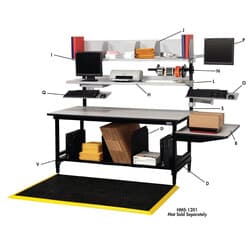
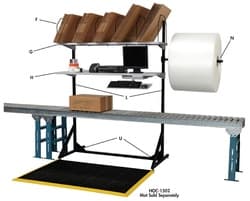
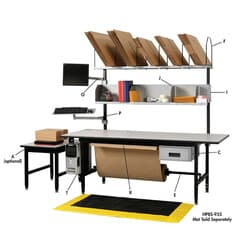
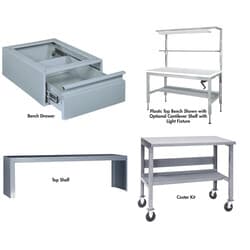
How to Choose the Right Ergonomic Work Bench
Choosing the right ergonomic work bench for your facility starts with understanding the tasks employees perform, the working height required, and the equipment or materials placed on the work surface. An appropriately configured workbench helps employees maintain more comfortable working positions while supporting repetitive assembly, inspection, packaging, repair, and production activities.
Adjustable height is one of the most important considerations when selecting an ergonomic workbench. Manual crank-adjustable models allow users to change the work surface height by turning a handle, while electric models provide convenient height adjustment at the push of a button. Hydraulic workbenches offer another option for facilities that require adjustable work surfaces for different operators or production tasks. Janeice Products offers models with different adjustment ranges and lifting mechanisms to accommodate varying workplace requirements.
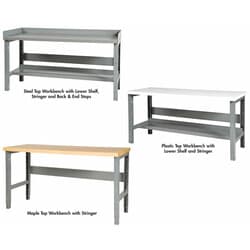
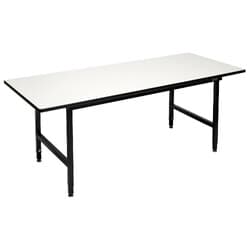
The work surface is equally important. Consider whether your application requires a standard laminate top, a wood surface, or an electrostatic discharge (ESD) work surface for suitable electronics-handling environments. The surface should provide enough room for tools, components, equipment, and materials without restricting the operator's movement.
Load capacity and stability should also guide your selection. Check the manufacturer's rated capacity and confirm that the bench can safely support the combined weight of the workpieces, tools, fixtures, and equipment used during normal operations. For specialized applications, consider accessories and custom configurations that can help adapt the workstation to your workflow.
Before ordering, verify the workbench's dimensions, minimum and maximum working heights, adjustment mechanism, surface material, and available accessories. Selecting the right configuration can help improve workstation organization and provide greater flexibility across multiple tasks and shifts.
Key Features to Look for in Ergonomic Work Benches
-
Height Adjustability: Choose manual crank, electric, or hydraulic adjustment according to how frequently the work surface needs to be repositioned and the convenience required by operators.
-
Load Capacity: Verify the rated capacity before placing heavy tools, fixtures, machinery, or materials on the workbench. Capacity varies by model and adjustment configuration.
-
Work Surface Material: Select laminate, wood, or an appropriate ESD surface based on the work being performed and the environmental requirements.
-
Size and Dimensions: Match the bench width, depth, and height range to the available floor space and the equipment required at the workstation.
-
Ergonomic Design: Look for adjustable working heights that help operators maintain comfortable working positions during assembly, inspection, and repetitive tasks.
-
Stability and Construction: Consider frame design, leveling glides, and structural construction to support reliable performance in industrial environments.
-
Color Options: Certain workbench models are available in multiple frame or surface colors, helping facilities maintain consistent workstation layouts.
-
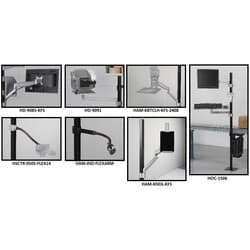
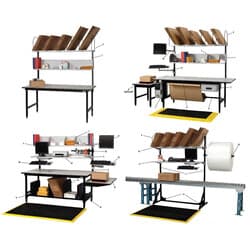
Accessories and Customization: Depending on the model, optional accessories and custom configurations can help accommodate specialized tools, storage needs, and production processes.
Industries That Use Ergonomic Work Benches
-
Manufacturing: Support assembly operations, component preparation, production tasks, and quality inspections.
-
Warehousing & Distribution: Provide organized work surfaces for order preparation, product inspection, labeling, and packaging.
-
Automotive: Support component assembly, parts inspection, repair work, and maintenance activities.
-
Electronics: Provide suitable work surfaces for component handling, testing, assembly, and ESD-sensitive operations when an appropriate ESD configuration is selected.
-
Maintenance & MRO: Create practical workstations for equipment repairs, tool handling, spare-part preparation, and service operations.
-
Laboratories & Testing Facilities: Provide organized work surfaces for inspection, sample preparation, and equipment-related tasks where the selected bench meets the application's requirements.
-
Packaging & Fulfillment: Support repetitive packing, sorting, labeling, and preparation tasks with adjustable working heights.
-
Industrial Workshops: Provide flexible workstations for fabrication support, general assembly, inspection, and equipment maintenance.
Frequently Asked Questions About Ergonomic Work Benches
Q1: What is an ergonomic workbench?
An ergonomic workbench is a workstation designed to support comfortable and efficient working positions. Height-adjustable models allow users to position the work surface according to their tasks and individual working requirements, making them suitable for assembly, inspection, packaging, and other industrial applications.
Q2: What is the difference between manual and electric height-adjustable workbenches?
Manual workbenches use a hand crank or another mechanical adjustment mechanism to change the work surface height. Electric models use a powered mechanism that adjusts the height at the push of a button. The best option depends on how frequently the height needs to change, the desired convenience, and the specific model's capacity and adjustment range.
Q3: What load capacity should I look for in an ergonomic workbench?
The required load capacity depends on the combined weight of the materials, tools, fixtures, and equipment placed on the work surface. Janeice Products offers models with different capacities. For example, a listed ergonomic hydraulic workbench supports up to 1,000 lbs. with 12 inches of adjustment or 750 lbs. with 16 inches of adjustment. Always check the specifications of the exact model before ordering.
Q4: Are ergonomic workbenches available with different work surface materials?
Yes. Available configurations vary by model and may include standard laminate, wood, and ESD work surfaces. Select a material based on durability, cleaning requirements, the type of work being performed, and any static-control requirements for sensitive electronic components.
Q5: Can I use an ergonomic workbench for electronics assembly?
Yes. An ergonomic workbench configured with an appropriate ESD work surface can be suitable for electronics assembly, testing, and component handling. Confirm that the selected surface and any required grounding or static-control accessories meet your facility's ESD requirements.
Q6: Are custom ergonomic workbench configurations available?
Certain models offer custom design or modification options. Depending on the product, you may be able to specify dimensions, adjustment ranges, colors, or accessories. Contact Janeice Products to discuss your application and confirm which customization options are available for your selected workbench.
Q7: How do I choose the correct height range for my workbench?
Consider the tasks performed, operator height, whether the work is completed while sitting or standing, and the tools or equipment placed on the surface. The selected adjustment range should allow the work surface to be positioned comfortably for the intended task. Review the minimum and maximum heights listed in the product specifications before purchasing.
Q8: Where can ergonomic work benches be used?
Ergonomic work benches are used in manufacturing plants, assembly lines, warehouses, packaging areas, maintenance workshops, laboratories, and electronics facilities. The appropriate model depends on the required working height, load capacity, surface material, available space, and operating environment.