
 Deals Of The Day
 Top Sellers
 Top Trending
 New Arrivals
 Shop By Brands
Doors Mesh
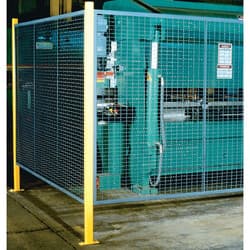
How to Choose the Right Wire Mesh Doors
Choosing the right wire mesh door for your facility starts with understanding the application, security requirements, and installation environment. Consider the opening dimensions, mesh size, frame construction, door configuration, and frequency of access. The right door should provide suitable visibility, durability, and controlled access while meeting your facility's operational and safety requirements.
For manufacturing plants and production areas, wire mesh guarding doors can help separate machinery and automated equipment from employee workspaces. In warehouses and distribution centers, mesh doors can be used for secured storage areas, equipment enclosures, and restricted-access sections. Their open mesh construction allows visibility and airflow while helping create a physical barrier around designated areas.
Before purchasing, carefully measure the installation opening and verify the door's overall dimensions, frame compatibility, mounting requirements, and opening direction. Also consider whether the application requires a hinged access door, sliding configuration, locking mechanism, or integration with an existing wire mesh guarding system. Always confirm that the selected product meets applicable workplace safety requirements.
Key Features to Look for in Wire Mesh Doors
-
Mesh Construction: Select an appropriate mesh pattern and opening size based on visibility, access control, and the level of protection required.
-
Frame Material: Check the frame construction and finish to ensure it is suitable for your industrial environment.
-
Door Dimensions: Measure the opening width and height accurately to ensure proper installation and operation.
-
Access Control: Consider locking arrangements, latches, and other access-control features required for restricted areas.
-
Hinge and Hardware Quality: Look for durable hinges, handles, and fastening components designed for regular industrial use.
-
Visibility and Airflow: Open mesh construction provides visibility through the enclosure and allows air circulation around equipment.
-
Safety Compatibility: Verify that the door integrates properly with the existing guarding system and required safety interlocks, where applicable.
-
Installation Requirements: Check mounting arrangements, frame compatibility, clearance, and installation instructions before ordering.
Industries That Use Wire Mesh Doors
-
Manufacturing: Machinery guarding, production line enclosures, restricted equipment access, and designated work areas.
-
Warehousing & Distribution: Secured storage sections, inventory areas, equipment enclosures, and controlled-access zones.
-
Automotive: Vehicle assembly areas, manufacturing equipment protection, and maintenance workstations.
-
Industrial Facilities: Access control around machinery, electrical equipment, and designated operational areas.
-
Logistics & 3PL: Separation of storage zones, inventory protection, and restricted warehouse sections.
-
Pharmaceutical & Healthcare Facilities: Selected equipment enclosures, storage areas, and controlled-access environments, subject to applicable hygiene and safety requirements.
-
Maintenance & MRO: Protective enclosures around equipment, maintenance areas, and industrial machinery.
Frequently Asked Questions About Wire Mesh Doors
Q1: What are wire mesh doors used for?
Wire mesh doors are commonly used in industrial environments to provide controlled access to enclosed areas while maintaining visibility and airflow. They are suitable for machinery guarding systems, warehouse storage enclosures, equipment protection, and restricted-access areas.
Q2: What is the difference between wire mesh doors and solid metal doors?
Wire mesh doors feature an open mesh construction that allows visibility and air circulation through the enclosure. Solid metal doors provide a more enclosed barrier and greater visual privacy. Wire mesh doors are often preferred for industrial guarding applications where employees need to see equipment while maintaining controlled access.
Q3: Are wire mesh doors suitable for industrial machinery guarding?
Yes, wire mesh doors can be used as access points within industrial machinery guarding systems. However, the complete guarding arrangement must meet the applicable machinery safety requirements. Depending on the application, safety interlocks and other protective measures may also be necessary.
Q4: How do I select the correct size of a wire mesh door?
Measure the width and height of the required opening and check the available installation clearance. Also verify the frame dimensions, hinge placement, opening direction, and mounting arrangement. Compare these measurements with the manufacturer's product specifications before ordering.
Q5: Do wire mesh doors provide security for warehouse storage areas?
Wire mesh doors can help restrict access to designated storage areas while allowing staff to see the contents inside. For improved access control, consider compatible locking mechanisms and secure mounting hardware. The appropriate configuration depends on the security requirements of your facility.
Q6: Can wire mesh doors be integrated with existing guarding systems?
Many wire mesh doors are designed for use with compatible industrial guarding systems. Before purchasing, verify the panel dimensions, frame design, mounting hardware, and connection requirements to ensure compatibility with your existing enclosure.
Q7: Can I order wire mesh doors in bulk for my facility?
For larger industrial projects and facility requirements, contact Janeice Products Co Inc to discuss product availability, quantities, and pricing. Our team can help you identify suitable options based on your application and specifications. Call +1 803-652-3025 or submit a Quote Request through our website.
Q8: Does Janeice Products ship wire mesh doors across the United States?
Janeice Products Co Inc serves customers nationwide from Aiken, South Carolina. Shipping methods, costs, and estimated delivery times depend on product availability, order quantities, dimensions, and destination. Contact our team at +1 803-652-3025 for current shipping information and assistance with larger orders.