
 Deals Of The Day
 Top Sellers
 Top Trending
 New Arrivals
 Shop By Brands
Casters Leveling
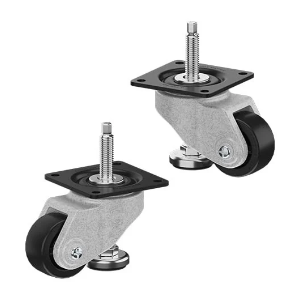


How to Choose the Right Leveling Casters
Choosing the right leveling casters for your equipment starts with understanding the load it must support and whether the equipment needs to move frequently or remain stationary during operation. Leveling casters combine mobility with a leveling mechanism that helps raise or stabilize equipment once it reaches the desired position. They are useful for workstations, machinery, assembly tables, and other equipment that requires both movement and stable positioning.
Load capacity is one of the most important factors when selecting leveling casters. Calculate the total weight of the equipment, including its maximum operating load, and confirm that the caster arrangement can safely support it. Consider how the weight is distributed, as uneven loading can place additional stress on individual casters.
Floor conditions and leveling range also matter. If your equipment operates on slightly uneven floors, choose a leveling mechanism with an appropriate adjustment range and a foot or pad suited to the floor surface. Check the mounting plate, bolt pattern, available clearance, and required lifting height to ensure the casters fit your equipment correctly.
Before purchasing, review the manufacturer's specifications to confirm load ratings, adjustment range, mounting dimensions, wheel material, and operating requirements. Choosing the right system helps improve equipment stability, supports efficient workflows, and makes repositioning easier when required.
Key Features to Look for in Leveling Casters
-
Load Capacity: Confirm that the combined rated capacity of the caster set is suitable for the equipment's total loaded weight. Allow for uneven weight distribution and operating conditions.
-
Leveling Adjustment: Check the available adjustment range to ensure the equipment can be positioned at the required height.
-
Stability: Select a leveling foot or pad designed to provide stable support when the equipment is stationary.
-
Mounting Compatibility: Verify the mounting plate dimensions, bolt pattern, stem type, and available installation space.
-
Wheel Material: Choose wheel materials according to the floor surface, operating environment, noise requirements, and expected frequency of movement.
-
Floor Protection: Consider non-marking wheels or suitable leveling pads when equipment is used on finished floors.
-
Operating Environment: For environments exposed to moisture, cleaning chemicals, or demanding industrial conditions, verify material compatibility and corrosion resistance.
-
Ease of Adjustment: Consider how easily the leveling mechanism can be adjusted and locked into position during installation and routine use.
Industries That Use Leveling Casters
-
Manufacturing: Position production equipment, assembly stations, and worktables that need to be moved for layout changes and stabilized during use.
-
Warehousing & Distribution: Support mobile workstations, packing tables, and equipment that must remain stable during loading and handling operations.
-
Automotive: Help position workshop equipment, workbenches, and specialized service stations.
-
Industrial Maintenance: Provide mobility and adjustable support for selected maintenance equipment and service workstations.
-
Electronics & Assembly: Support workstations and equipment that require precise positioning and a stable operating surface.
-
Commercial Facilities: Help position movable counters, worktables, and other compatible equipment that benefits from adjustable leveling support.
-
Laboratories & Technical Workspaces: Support suitable equipment and workstations that need stable positioning on floors that may not be perfectly level.
Frequently Asked Questions About Leveling Casters
Q1: What are leveling casters?
Leveling casters are caster systems designed to provide mobility while also allowing equipment to be adjusted and stabilized in position. Depending on the design, a leveling foot or pad can be lowered to support the equipment and reduce reliance on the wheels while it is stationary.
Q2: What is the difference between standard casters and leveling casters?
Standard casters primarily allow equipment to roll from one location to another. Leveling casters add an adjustment mechanism that helps stabilize or level the equipment after positioning. They are particularly useful for workstations, machinery, and equipment that requires both mobility and stable support.
Q3: How do I determine the load capacity required for leveling casters?
Start by calculating the combined weight of the equipment and its maximum expected load. Divide this weight across the intended caster arrangement, then account for uneven load distribution and the manufacturer's recommended safety requirements. Always verify the rated capacity of each component and the complete caster system before installation.
Q4: Can leveling casters be used on uneven floors?
Leveling casters can help compensate for minor floor variations within their specified adjustment range. However, they are not intended to correct significant floor irregularities or replace proper floor preparation. Check the manufacturer's adjustment limits and ensure that the equipment remains stable after leveling.
Q5: Are leveling casters suitable for industrial workbenches and machinery?
They may be suitable for compatible workbenches, machinery, assembly stations, and other equipment designed for caster mounting. The correct choice depends on the equipment's weight, mounting configuration, required adjustment range, and stability requirements. Always follow the equipment and caster manufacturer's installation instructions.
Q6: What should I check before ordering leveling casters?
Before ordering, confirm the total load capacity, mounting dimensions, wheel material, leveling range, overall height, available clearance, and floor conditions. Also determine whether the equipment needs to be moved frequently or will remain stationary for most operations. Reviewing these specifications helps ensure compatibility with your application.
Q7: Can leveling casters replace fixed leveling feet?
Not in every application. Leveling casters are useful when equipment needs both mobility and adjustable support. Fixed leveling feet may be more appropriate when equipment rarely moves and requires a permanent support arrangement. For heavy machinery or equipment subject to vibration, verify the manufacturer's recommendations before selecting either option.