
 Deals Of The Day
 Top Sellers
 Top Trending
 New Arrivals
 Shop By Brands
Carts Utility
Shop industrial utility carts at Janeice Products Co Inc, your trusted material handling supply source based in Aiken, South Carolina. Whether you need utility carts for transporting tools and supplies, multi-shelf carts for organizing materials, or durable carts for everyday warehouse and facility operations, our catalog offers practical material handling solutions for a variety of workplace needs. Designed to support efficient movement, convenient storage, and improved organization, utility carts are ideal for manufacturing facilities, warehouses, maintenance departments, workshops, offices, and commercial environments. Explore our range of utility carts to find the right solution for your material transport and workflow requirements.
How to Choose the Right Utility Cart
Choosing the right utility cart for your facility starts with understanding the materials you need to transport, the frequency of use, and the environment in which the cart will operate. Consider the weight and dimensions of your items, the number of shelves required, the distance the cart must travel, and the available space for maneuvering. Selecting a cart that matches your workload helps improve material handling efficiency and keeps everyday operations organized.
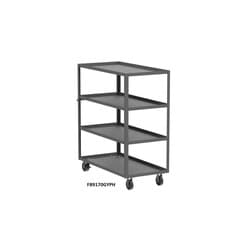
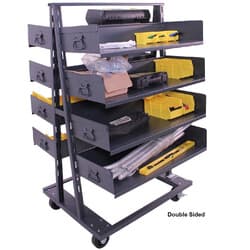
For transporting tools, supplies, and small components, multi-shelf utility carts provide convenient storage and easy access to materials. Two-shelf, three-shelf, four-shelf, and five-shelf stock carts are available for different storage and transport requirements. These configurations can help employees move multiple items in a single trip while keeping supplies separated and organized.
For heavier loads or larger materials, consider a cart designed for the required load capacity and operating conditions. The platform, shelf construction, wheel type, and handle design all affect how comfortably and safely a cart can be moved. Before purchasing, check the manufacturer's specifications for load capacity and ensure the cart is suitable for your intended application.
Wheel selection is equally important. Carts used on smooth indoor floors may require different casters from those operating across rough surfaces or thresholds. Choose wheels that provide suitable maneuverability, stability, and floor protection. Also consider the cart's overall dimensions to ensure it can pass through doorways, aisles, and work areas without difficulty.
Key Features to Look for in Industrial Utility Carts
-
Load Capacity: Choose a utility cart with a rated capacity suitable for the total weight of the materials being transported. Always follow the manufacturer's load limits.
-
Number of Shelves: Select two-shelf, three-shelf, four-shelf, or five-shelf configurations according to your storage and transportation needs.
-
Construction Material: Consider steel, aluminum, or other available materials based on durability, weight, corrosion resistance, and the working environment.
-
Wheel and Caster Type: Select appropriate casters for your floor conditions, load requirements, and maneuverability needs.
-
Handle Design: Ergonomic and raised handles can provide convenient control when moving materials around a workplace.
-
Cart Dimensions: Check the platform or shelf dimensions, overall width, length, and height to ensure the cart fits your workspace and can accommodate the items being transported.
-
Brakes and Floor Locks: For applications that require the cart to remain stationary during loading or unloading, consider models equipped with suitable braking or floor-lock features.
-
Storage and Organization: Raised shelf edges, multiple levels, and other available design features can help keep materials organized during transport.
Industries That Use Utility Carts
-
Manufacturing: Transport components, tools, assembly materials, and production supplies between workstations and production areas.
-
Warehousing & 3PL: Move inventory, picking supplies, packaging materials, and smaller goods through warehouse aisles.
-
Healthcare & Laboratories: Transport approved supplies, equipment, and materials between storage rooms, laboratories, and work areas.
-
Retail & Distribution: Move merchandise, restocking supplies, and inventory between stockrooms and sales floors.
-
Offices & Commercial Facilities: Transport office supplies, files, equipment, and general-purpose materials.
-
Maintenance & MRO: Carry tools, replacement parts, fasteners, and maintenance supplies to service locations.
-
Hospitality & Facility Management: Move cleaning supplies, equipment, and general-purpose materials throughout buildings and commercial facilities.
Frequently Asked Questions About Utility Carts
Q1: What are industrial utility carts used for?
Industrial utility carts are used to transport tools, supplies, components, and materials within workplaces. They help reduce repeated trips, keep items organized, and improve the movement of materials between storage areas, workstations, and operational departments.
Q2: What is the difference between a utility cart and a platform truck?
A utility cart commonly features shelves or trays for organizing and transporting smaller items, tools, and supplies. A platform truck typically has a flat loading surface designed to move larger or bulkier materials. The best option depends on the size of your load, storage requirements, and handling process.
Q3: How many shelves should I choose for a utility cart?
The ideal number of shelves depends on the quantity, size, and type of materials you need to transport. Two-shelf carts offer straightforward access to larger items, while three-, four-, and five-shelf models provide additional storage levels for smaller supplies and multiple items. Check the available shelf dimensions and the cart's total load capacity before selecting a model.
Q4: How do I determine the load capacity required for a utility cart?
Calculate the combined weight of the materials you expect to carry during normal operations. Select a cart whose manufacturer-rated capacity accommodates that load, and check whether the rating applies to the entire cart or individual shelves. Distribute loads evenly and follow the manufacturer's operating instructions.
Q5: Which wheels are best for industrial utility carts?
The best wheels depend on the floor surface, load weight, travel distance, and operating environment. Different caster materials and designs are suited to different conditions, including smooth floors and more demanding industrial surfaces. Review the product specifications to select suitable wheels for your application.
Q6: Are utility carts suitable for warehouses and manufacturing facilities?
Yes. Utility carts are widely used in warehouses and manufacturing environments to transport inventory, tools, components, and production supplies. Choosing a cart with suitable dimensions, shelf configuration, casters, and load capacity helps support efficient material movement.
Q7: What should I check before purchasing a utility cart?
Before ordering, review the cart's load capacity, dimensions, number of shelves, construction material, wheel type, handle design, and any required braking features. Confirm that the cart can move through your facility's aisles and doorways and is suitable for the materials and surfaces involved.