
 Deals Of The Day
 Top Sellers
 Top Trending
 New Arrivals
 Shop By Brands
Bins Stacking
Shop industrial stacking bins at Janeice Products Co Inc, your trusted material handling supply source based in Aiken, South Carolina. Whether you need stackable bins for small parts organization, storage containers for warehouse inventory, or durable plastic bins for manufacturing and distribution operations, our catalog offers practical storage solutions for a variety of industrial applications. Designed to help businesses organize components, maximize available storage space, and improve inventory accessibility, stacking bins are ideal for warehouses, manufacturing plants, maintenance departments, workshops, and distribution centers nationwide. Explore different sizes, materials, and configurations to find the right stacking bin solution for your facility.
How to Choose the Right Industrial Stacking Bins
Choosing the right industrial stacking bins starts with understanding the size, weight, and quantity of items you need to store. Consider the dimensions of your products, the available shelf or floor space, and how frequently employees need to access stored materials. Properly selected stacking bins help maximize vertical storage space, maintain organized inventory, and improve efficiency in busy industrial environments.
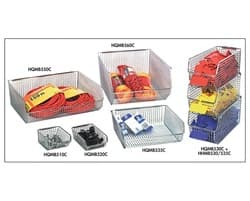
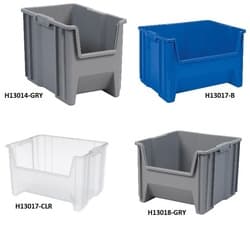
For small components such as fasteners, hardware, electrical parts, and maintenance supplies, compact stacking bins provide individual storage locations that help simplify identification and retrieval. For larger components or bulk storage applications, heavy-duty plastic containers can provide additional capacity and durability. Some containers are designed to nest when empty and stack with compatible lids when in use, helping businesses save space during storage and handling.
Material selection is equally important. Plastic stacking bins are suitable for many general-purpose storage applications because they are lightweight, durable, and easy to maintain. When selecting bins for demanding environments, verify the material's compatibility with the substances, temperatures, and operating conditions in your facility.
Before ordering, check the external and internal dimensions, load capacity, stacking compatibility, and available accessories. Ensure that the bins are designed to stack securely under the expected load and that the bottom bins can safely support the weight above them. Always follow the manufacturer's stacking and load capacity recommendations.
Key Features to Look for in Industrial Stacking Bins
-
Stacking Stability: Choose bins designed to fit securely together when stacked. Verify the recommended stacking limits to prevent instability or damage.
-
Material and Durability: Select durable plastic construction for general industrial storage and confirm that the material suits your operating environment.
-
Size and Capacity: Match bin dimensions and internal capacity to the items being stored. Consider both current inventory and future storage requirements.
-
Load Capacity: Check the manufacturer's rated load capacity and maximum stacking load before storing heavy components.
-
Space Efficiency: Stackable designs help maximize vertical storage space, while nestable containers can reduce storage requirements when empty.
-
Accessibility: Select a bin configuration that allows employees to retrieve stored items conveniently without unnecessarily disturbing other bins.
-
Identification and Organization: Use labels or color-coded bins to identify inventory by product type, department, part number, or workflow stage.
-
Compatibility: Verify that bins fit your existing shelves, racks, storage systems, or compatible lids before placing an order.
Industries That Use Industrial Stacking Bins
-
Manufacturing: Organize production components, fasteners, hardware, and assembly supplies near workstations.
-
Warehousing & 3PL: Improve inventory organization, picking operations, order preparation, and general warehouse storage.
-
Automotive: Store replacement parts, fittings, fasteners, and small components in service areas and production facilities.
-
Construction & MRO: Keep maintenance supplies, hardware, tools, and spare parts organized in workshops and repair departments.
-
Electrical & Electronics: Organize connectors, electronic components, and small assembly parts using appropriately selected storage bins.
-
Retail & Distribution: Manage back-room inventory, spare products, and frequently accessed stock more efficiently.
-
Healthcare & Laboratories: Organize suitable supplies, small equipment, and nonhazardous components according to the storage requirements of the application.
Frequently Asked Questions About Industrial Stacking Bins
Q1: What are industrial stacking bins used for?
Industrial stacking bins are used to store and organize parts, components, hardware, supplies, and inventory in warehouses, manufacturing facilities, workshops, and distribution centers. Their stackable design helps businesses make better use of vertical space while keeping materials organized and accessible.
Q2: What are the benefits of using stacking bins?
Stacking bins help maximize storage space, improve inventory organization, and make frequently used items easier to locate. They can also reduce clutter in work areas and support more efficient picking, replenishment, and material handling operations.
Q3: Can industrial stacking bins hold heavy items?
Some stacking bins and containers are designed for heavy-duty applications, but load capacity varies by product. Before storing heavy items, check the individual product specifications for its rated capacity and maximum stacking load. Never exceed the manufacturer's recommended limits.
Q4: Are stacking bins available in different sizes and materials?
Yes. Industrial storage bins and containers are available in different dimensions, capacities, materials, and configurations. The right option depends on the size and weight of the stored items, the available storage space, and the requirements of your operation. Review individual product specifications to compare available options.
Q5: What is the difference between stackable and nestable containers?
Stackable containers are designed to sit securely on top of one another when used according to the manufacturer's guidelines. Nestable containers fit inside one another when empty, helping reduce the space required for storage and return transport. Certain container models support both nesting when empty and stacking with compatible lids.
Q6: How can I improve inventory organization with stacking bins?
Start by grouping similar products and components together, then assign appropriately sized bins to each category. Use labels, part numbers, and color coding where appropriate to make identification easier. Arrange frequently used items in accessible locations and ensure that stacked bins remain stable and within their rated load limits.
Q7: How do I choose the right stacking bins for my warehouse?
Measure the available storage area and determine the dimensions, weight, and quantity of items you need to store. Compare bin capacity, material, stacking compatibility, and load ratings. Also consider whether the bins must fit existing shelving or racks and whether lids, labels, or other accessories are required. Reviewing these factors before ordering helps you select a storage solution suited to your warehouse workflow.